
The Precision Powerhouse: Demystifying Ball Screw Technology

Forget about clunky threads and grinding friction. In the world of precision linear motion, the ball screw reigns supreme. Found in everything from high-speed CNC machines carving metal masterpieces and delicate 3D printers laying down plastic layers with micron accuracy, to the powerful steering systems of modern cars and the positioning stages of semiconductor manufacturing, ball screws are the silent workhorses enabling smooth, efficient, and incredibly precise movement. But how do they transform humble rotation into such high-fidelity linear travel? Let's unravel the mechanics.

The Core Problem: Friction in Traditional Screws
Imagine a standard threaded rod (a lead screw) and a nut with a matching internal thread. When you rotate the rod, the nut moves along it linearly. Simple, right? The problem? Sliding friction. The large surface area of the threads rubbing against each other creates significant resistance, leading to:
High Torque Requirements: You need a lot of rotational force (torque) just to move the nut.
Inefficiency: Much of the input energy is wasted as heat from friction.
Wear and Tear: Constant sliding contact causes rapid thread wear, reducing accuracy and lifespan.
"Stick-Slip" Motion: Movement can be jerky, not smooth, especially at low speeds or under light loads.
Backlash: Clearance between threads leads to lost motion when reversing direction.
The Ball Screw Solution: Rolling to the Rescue
The ball screw ingeniously replaces sliding friction with rolling friction. Here's how it achieves this transformation:
The Core Components:
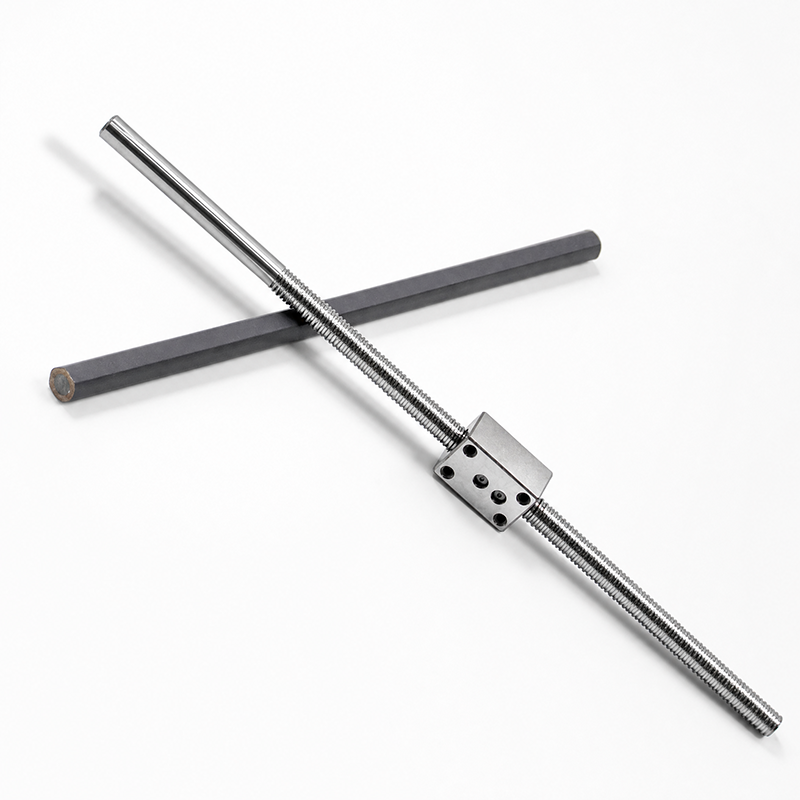
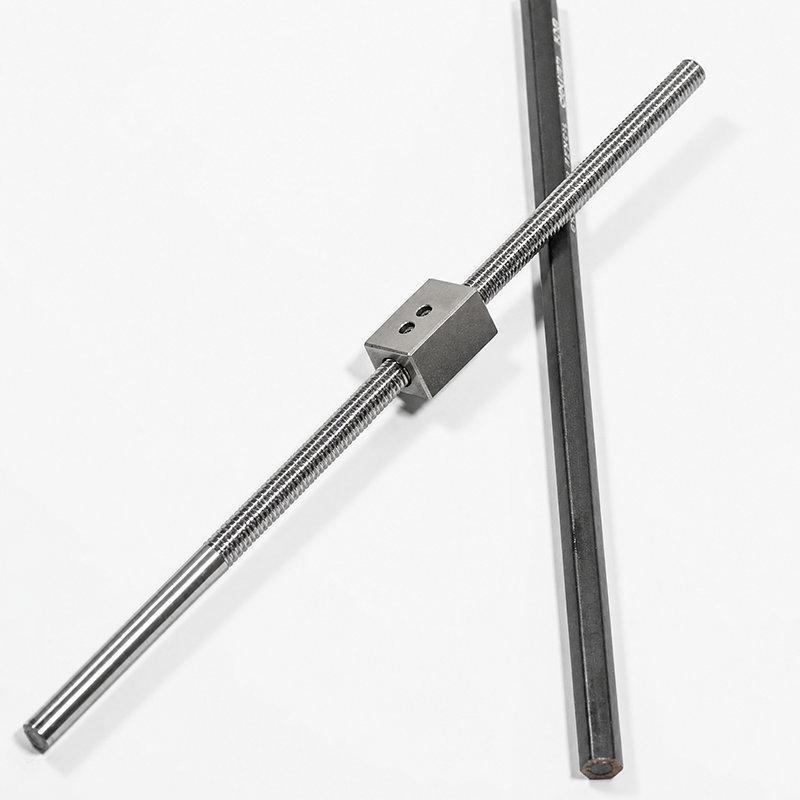
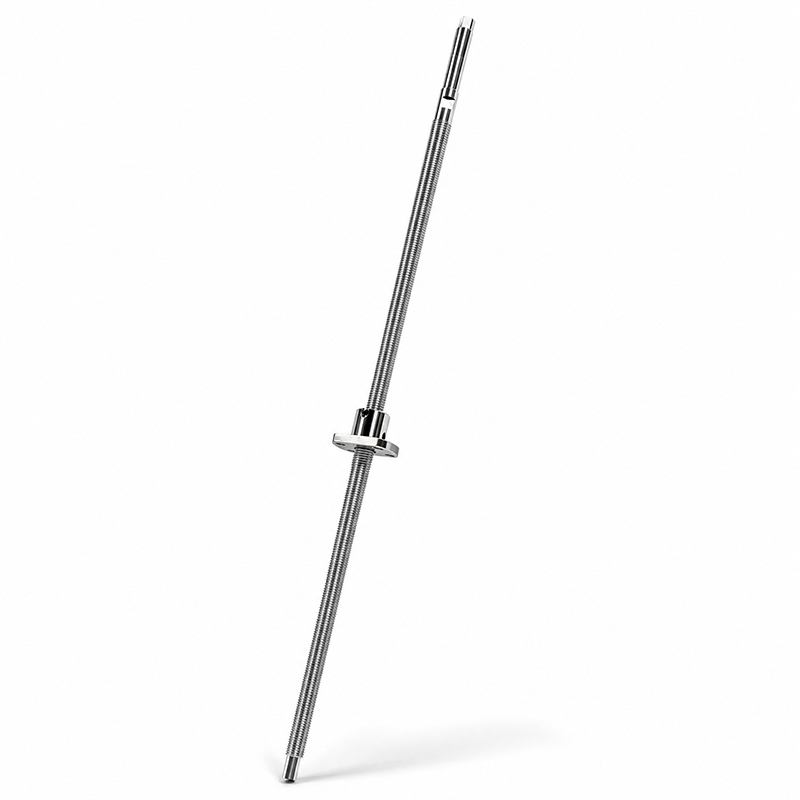
Screw Shaft: A precision-ground shaft with a deep, helical groove (the "raceway") running along its length. This groove has a carefully machined profile, usually a Gothic arch shape.
Nut: A housing with a matching internal helical groove.
Ball Bearings: Hardened steel balls that sit within the grooves between the screw and the nut.
Ball Return System: A critical internal pathway (often tubes or deflectors) that guides the balls from the end of one circuit back to the beginning, creating a continuous loop.
The Magic of Recirculation:
As the screw shaft rotates, the balls roll along the matching helical grooves formed by the screw and the nut.
This rolling action directly transfers the rotational force into linear motion of the nut (or conversely, rotating the nut moves the screw linearly).
Crucially, as the balls reach the end of the nut's internal raceway, they are picked up by the ball return system.
This system channels the balls smoothly back to the starting point of the raceway, creating an endless recirculating stream of balls within the nut assembly.
Why Rolling Friction Wins:
Replacing sliding contact with rolling contact yields dramatic advantages:
Drastically Reduced Friction: Rolling friction is typically only 1/50th to 1/100th of sliding friction. This is the game-changer.
High Efficiency: Ball screws convert over 90% of the input rotational energy into useful linear motion (compared to often less than 50% for lead screws).
Smooth, Precise Motion: No stick-slip. Motion is exceptionally smooth even at very low speeds or under minute movements, enabling sub-micron positioning.
High Speed Capability: Significantly higher linear speeds are achievable due to lower friction and heat generation.
Reduced Wear & Long Life: Minimal friction means minimal wear on the grooves and balls, leading to vastly extended service life.
Predictable Backlash Control: Precision manufacturing allows for minimal, controlled, and pre-adjusted backlash (clearance between balls and grooves).
Key Terminology & Design Features
Lead: The distance the nut travels along the screw shaft with one complete rotation (e.g., 5mm, 10mm, 20mm). Crucially, this is different from pitch (the distance between adjacent threads).
Preloading: Intentionally applying a controlled internal force between the balls and the raceways. This eliminates backlash and increases rigidity but slightly increases friction. Common methods include using oversized balls or a double-nut arrangement.
Accuracy Grades: Ball screws are manufactured to strict international accuracy grades (e.g., ISO P1, P3, P5, P7) defining permissible deviations in lead error, travel variation, etc. Higher grades = higher precision = higher cost.
Lubrication: Essential to minimize wear and prevent corrosion inside the nut. Grease is common, but oil lubrication systems are used for very high speeds or continuous operation.
Why Choose a Ball Screw?
Ball screws are the preferred solution when your application demands:
High Precision Positioning: Essential for CNC machining, robotics, metrology, optics, and semiconductor equipment.
High Efficiency: Critical for reducing motor size, power consumption, and heat generation.
High Load Capacity: Can transmit significant forces smoothly and reliably.
High Speed: Enables rapid traversing and positioning.
Long Service Life & Reliability: Minimizes downtime and maintenance costs.
Smooth, Quiet Operation: Important for lab environments, medical devices, and consumer products.
Applications: Where Precision Moves
You'll find ball screws powering motion in:
CNC Machine Tools (Mills, Lathes, Routers)
Industrial Robots & Automation Systems
3D Printers & Additive Manufacturing
Coordinate Measuring Machines (CMMs)
Semiconductor Wafer Handling & Lithography
Medical Imaging Equipment (CT, MRI tables)
Aircraft Actuators (Flaps, Landing Gear)
Electric Power Steering (EPS) Systems
Precision Stages for Optics & Lasers
In Conclusion: The Engineered Advantage
The ball screw is a triumph of mechanical engineering. By harnessing the simple principle of rolling friction through an ingenious recirculating ball mechanism, it overcomes the fundamental limitations of traditional screws. The result is a component that delivers unparalleled precision, efficiency, speed, and longevity for demanding linear motion applications. Next time you see a machine moving with astonishing accuracy or feel the effortless steering of a modern car, remember the silent revolution happening inside – the smooth, relentless recirculation of ball bearings within a ball screw, masterfully converting rotation into precise linear power. It's the hidden technology that keeps our advanced world moving forward, one perfectly controlled micron at a time.
Comments