
AOI XY stage ball screw: Comparing 1602, 1605, 1610 and 1620

AOI XY stage ball screw selection should match lead to stroke, load, speed and positioning requirements—not treat lead as an accuracy rating. WY offers 16mm-diameter models with 2mm, 5mm, 10mm and 20mm leads. The 1605 has ground or rolled options; choosing it or another lead requires assessment of the complete axis, including drive, support and positioning requirements.
How do the four 16mm ball screw leads compare?
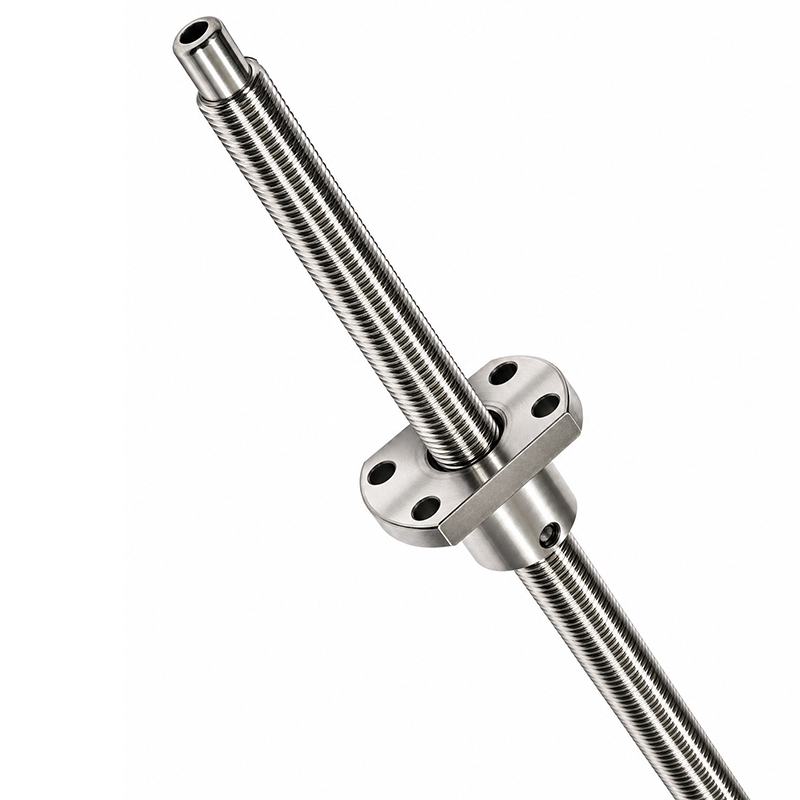
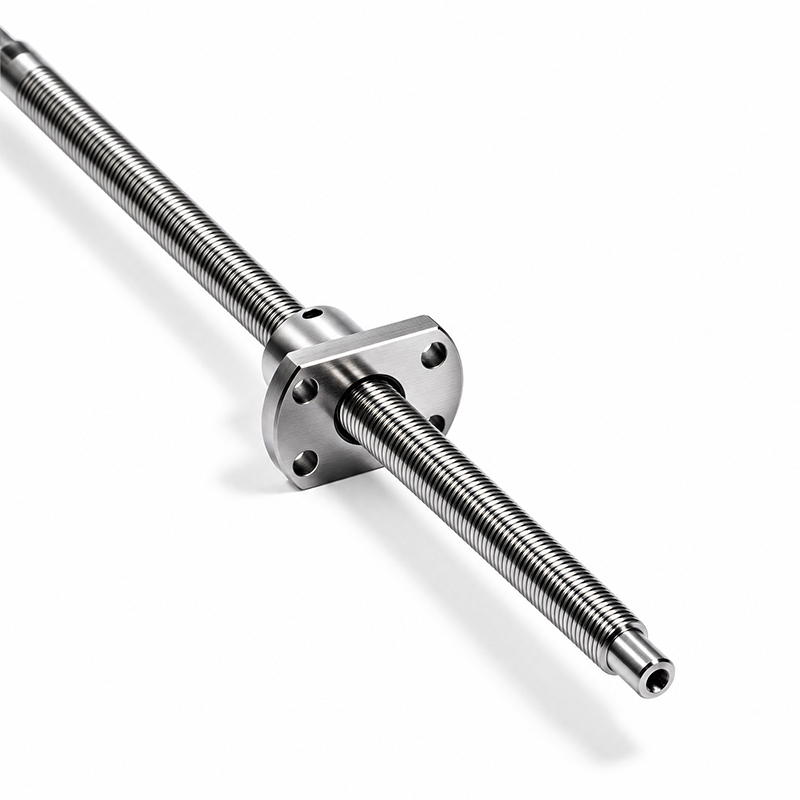
The four models share a 16mm diameter but have different leads. For 16mm ball screw lead selection, compare this geometric difference first, then assess manufacturing process, nut structure and application requirements separately.
Model | Diameter | Lead |
|---|---|---|
1602 ball screw | 16mm | 2mm |
1605 ball screw | 16mm | 5mm |
1610 ball screw | 16mm | 10mm |
1620 ball screw | 16mm | 20mm |
WY's 1602 is a rolled ball screw intended for small-lead feed and compact positioning. The 1605 offers ground or rolled manufacturing in both miniature and conventional branches. For 1610, the miniature branch is rolled, while the conventional branch offers ground or rolled options. The 1620 is rolled.
These are candidates for assessment in a self-built positioning mechanism, not interchangeable assemblies or confirmed AOI configurations.
Does a 2 mm lead guarantee better AOI positioning?
No. The 1602 ball screw's 2mm lead does not establish higher complete-axis positioning accuracy or self-locking behavior.
WY identifies the 1602 for optical adjustment, alignment movement and inspection-sample positioning. Its rolled accuracy designation is IT7, but that designation must not be converted directly into a C grade or treated as the positioning accuracy of an assembled stage.
For a camera or sample stage, assess the screw together with preload, supports, feedback and installation. Define positioning and repeat-positioning acceptance requirements independently of the chosen lead.
What must be specified for a 1605 AOI XY stage?
A 1605 assessment should start with its 16mm diameter and 5mm lead, then define the required stroke, load, speed and positioning acceptance criteria. WY identifies inspection-instrument XY stage transmission as a selection direction for this model.
The manufacturing branches require separate consideration:
Miniature ground 1605: IT1 and IT3–IT5.
Conventional ground 1605: IT3–IT5.
Rolled 1605: IT7.
Keep these IT designations as specified rather than converting them into C grades. Choose the process and nut structure against the axis requirements; do not transfer dimensions or performance parameters between different structures.
How should a camera positioning axis compare 1605 and 1610?
A 1605 vs 1610 ball screw comparison starts with 5mm versus 10mm theoretical travel per revolution. For a vision inspection camera positioning axis, the decision must also address the required move distance, motor torque-speed curve, acceleration, deceleration and settling-time target.
Worked theoretical feed calculation: screw revolutions equal travel divided by lead. For a theoretical 10mm move, the 1605 requires 10mm ÷ 5mm per revolution = 2 revolutions; the 1610 requires 10mm ÷ 10mm per revolution = 1 revolution. This is a geometric calculation, not a measured move time or inspection-throughput result.
Compare the resulting motion requirement with the intended motor and complete move profile. Fewer screw revolutions do not, by themselves, establish a shorter move-and-settle cycle. Keep the 1610 miniature and conventional manufacturing branches separate during assessment.
When should an AOI transfer or scanning axis consider a 20 mm lead?
Consider the 1620 when evaluating a larger-lead transmission for a workpiece transfer or scanning axis. WY's 16mm ball screw 20mm lead model is rolled and provides 20mm theoretical movement per revolution; that does not guarantee high speed or high positioning accuracy.
Distinguish continuous scanning from stop-and-settle imaging, then assess the required stroke, thrust, motion profile and support arrangement. Load rating, critical speed, permissible operating speed and life are confirmed for the specific application with the engineering team.
What should accompany an engineering assessment request?
Provide drawings and the load, stroke and speed requirements so the screw can be assessed as part of the intended mechanism. WY offers free assessment of load capacity, life and ball screw dimensional suitability.
Assembly and component drawings showing the nut interface, screw ends, supports and available installation space.
X- and Y-axis moving masses, payloads and stacked-axis arrangement.
Stroke, move distances, target speed, acceleration and deceleration profile.
Whether the axis performs continuous scanning or stop-and-settle positioning, including the settling-time target.
Motor configuration, torque-speed curve, feedback arrangement and intended preload.
Positioning, repeat-positioning and inspection acceptance requirements.
Whether procurement covers a screw alone or a screw-and-nut assembly.
Send WY your drawings and motion requirements for an application assessment and specification discussion.
How should I choose a 2 mm, 5 mm, 10 mm, or 20 mm lead for a 16 mm ball screw in a self-built AOI XY stage?
Compare lead against stroke, load, speed and positioning requirements, then assess the complete drive and support configuration. WY's 1602, 1605, 1610 and 1620 have 2mm, 5mm, 10mm and 20mm leads respectively.
Does a 2 mm lead ball screw guarantee better positioning accuracy for a vision inspection stage?
No. WY's 1602 selection guidance states that small lead does not mean higher accuracy or self-locking; positioning performance requires assessment of the complete machine configuration.
How do the manufacturing options differ between 1605 and 1610?
WY offers ground or rolled 1605 options in both miniature and conventional branches. For 1610, the miniature branch is rolled, while the conventional branch offers ground or rolled manufacturing.
When should an AOI workpiece transfer or scanning axis consider a 1620 ball screw?
The 1620 is a candidate when evaluating larger-lead movement for a transfer or scanning mechanism. It has a 16mm diameter, 20mm lead and rolled construction; suitability depends on the specific mechanism and operating requirements.
What should I submit for an application assessment?
Provide drawings and load, stroke and speed requirements. WY offers free assessment of load capacity, life and ball screw dimensional suitability.

Comments